


.png)
10 Essential Digital Marketing Strategies for Startups in 2025
In the competitive world of startups, a brilliant idea is only half the battle. To gain traction, build a loyal customer base, and achieve sustainable growth, you need a smart, agile, and effective marketing plan. With limited budgets and even more limited time, the crucial question becomes: where do you focus your efforts for maximum impact? This guide cuts through the noise to deliver a prioritized playbook of the most powerful digital marketing strategies for startups. We move beyond generic advice to provide a clear, actionable roadmap tailored to your unique journey.
This comprehensive listicle breaks down ten proven tactics designed to help you navigate the pivotal stages of your business, from generating pre-launch buzz to fueling scalable growth. You will discover how to master everything from Content Marketing and SEO to Pay-Per-Click (PPC) advertising and community engagement. To lay a strong foundation for your online presence, it's essential to understand how to create effective ad strategies that align with your specific goals.
Each strategy is detailed with tactical steps, key performance indicators (KPIs) to measure success, and real-world examples to guide your implementation. Los Angeles is at the center of our service area, and we proudly support clients across a wide network of surrounding cities and neighborhoods throughout Southern California. Our reach includes every corner of L.A.—from Downtown Los Angeles, Hollywood, West Hollywood, Beverly Hills, and Santa Monica to the beach communities of Malibu, Venice, Marina del Rey, Hermosa Beach, Manhattan Beach, and Redondo Beach. We also extend service through the San Fernando Valley, including Sherman Oaks, Studio City, Encino, Van Nuys, North Hollywood, Burbank, Glendale, Pasadena, Woodland Hills, Chatsworth, Canoga Park, Reseda, Northridge, and Tarzana. In the San Gabriel Valley, we work with clients in Alhambra, Monterey Park, San Gabriel, Temple City, Rosemead, Arcadia, El Monte, South El Monte, West Covina, Covina, Baldwin Park, Azusa, Glendora, Duarte, and Monrovia. Farther southeast, we serve Whittier, Pico Rivera, Downey, Norwalk, La Mirada, La Habra, and Cerritos. We also support the South Bay—including Torrance, Carson, Gardena, Hawthorne, Inglewood, and Long Beach—as well as the Gateway Cities and communities throughout the I-10, I-5, 101, and 405 corridors. Whether you’re in a major metro area or a smaller surrounding neighborhood, our team delivers reliable, high-quality service anywhere in or around Los Angeles. Consider this your go-to guide for transforming ambitious goals into measurable results in a crowded digital landscape. Let’s dive in.
1. Content Marketing
Content marketing is the strategic practice of creating and distributing valuable, relevant, and consistent content to attract and retain a clearly defined audience. For startups, this is one of the most powerful digital marketing strategies for startups because it builds trust, establishes authority, and generates organic traffic without a massive advertising budget. Instead of directly pitching your products, you provide genuinely useful content that solves your audience's problems.

This approach positions your brand as a helpful expert. Think of HubSpot’s extensive blog filled with marketing and sales resources or Buffer’s highly practical social media guides. These companies became industry leaders by first becoming the go-to source for information, attracting customers who were ready to buy.
When and Why to Use This Strategy
Content marketing is ideal for startups in the pre-launch and launch phases to build an initial audience and generate buzz. It’s also a cornerstone of the growth phase, fueling SEO, lead generation, and customer loyalty. This strategy excels for businesses with a longer sales cycle or those selling complex products, as it educates prospects and nurtures them toward a purchase decision. A well-executed content strategy is the foundation for almost every other digital marketing effort.
Actionable Implementation Steps
Identify Core Content Pillars: Define 3-5 broad topics that align with your business goals and customer pain points. If you're a SaaS startup in Los Angeles targeting other small businesses, your pillars might be "Local SEO," "Ecommerce Growth," and "Social Media for Retailers."
Conduct Keyword Research: Use tools like Ahrefs or SEMrush to find specific questions your audience is asking. Focus on long-tail keywords (e.g., "how to market a new coffee shop in Santa Monica") to capture high-intent traffic.
Create and Repurpose: Develop a high-value asset, like a comprehensive guide or whitepaper. Then, break it down into smaller pieces: blog posts, infographics, social media updates, and video clips. This maximizes your effort and reaches audiences on different platforms. For expert help creating high-quality, optimized content, consider the benefits of hiring a professional blogger.
2. Social Media Marketing
Social media marketing leverages platforms like Instagram, LinkedIn, TikTok, and Facebook to build brand awareness, engage with audiences, and drive conversions. For startups, this is a vital digital marketing strategies for startups toolkit because it offers a direct, cost-effective channel to build a community, share your brand’s personality, and communicate directly with customers. It turns passive observers into active, loyal fans.
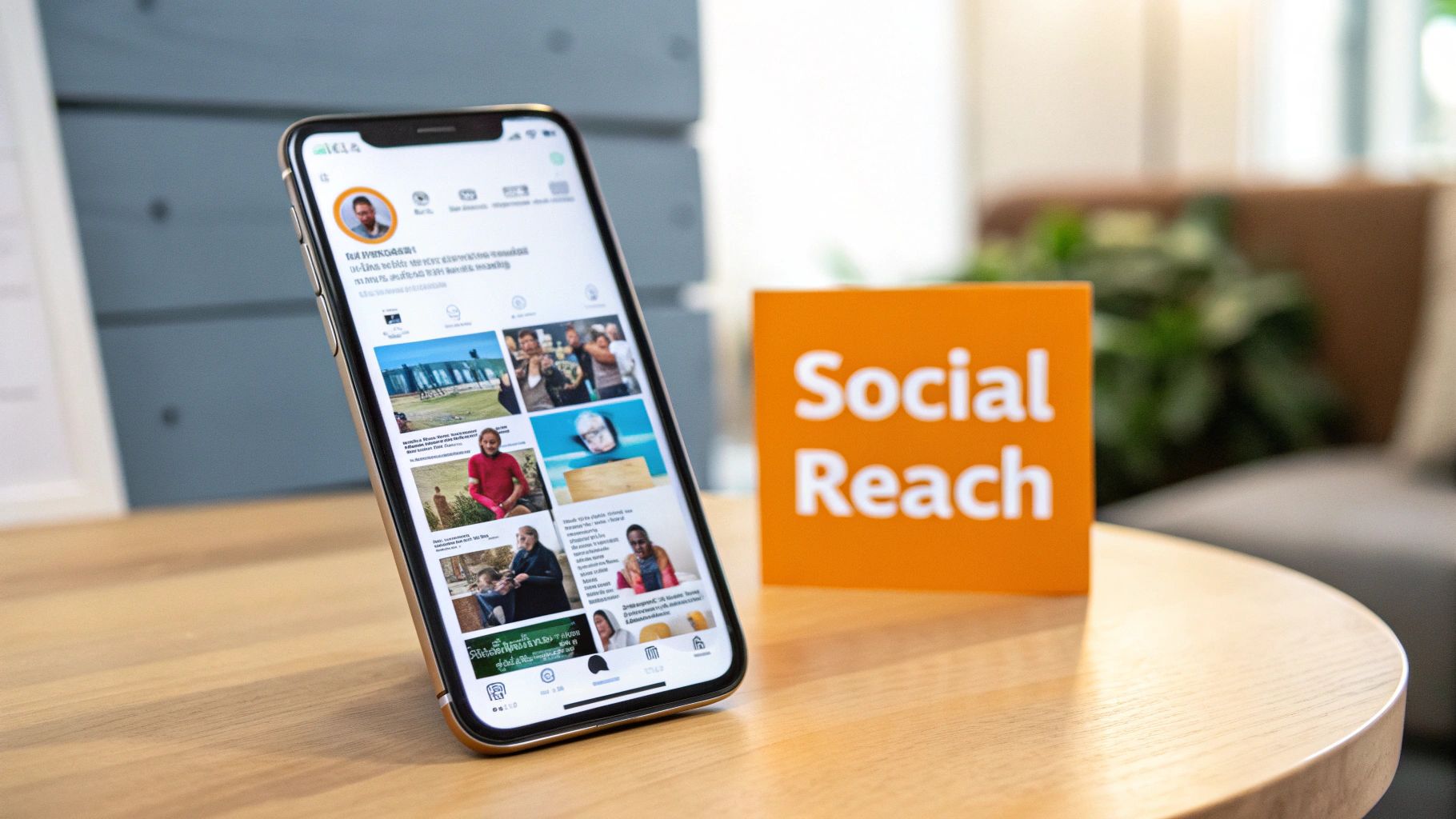
This strategy allows startups to humanize their brand and create authentic connections. Think of Dollar Shave Club’s viral YouTube launch video that catapulted them to fame, or Glossier’s masterful use of Instagram to build a community-driven beauty empire. These companies didn't just sell products; they started conversations and built movements on platforms where their audience was already active.
When and Why to Use This Strategy
Social media is essential during the pre-launch phase to build an early waitlist and generate initial buzz. It becomes a critical engine during the launch and growth phases for customer acquisition, feedback collection, and brand reinforcement. This strategy is particularly powerful for B2C startups, e-commerce brands, and any business where visual storytelling and community engagement can drive purchasing decisions. A strong social media presence amplifies all other marketing efforts.
Actionable Implementation Steps
Select the Right Platforms: Don't try to be everywhere. If you're a B2B tech startup in Glendale, focus on creating insightful content for LinkedIn and Twitter. A trendy clothing brand based in Venice Beach should prioritize visual platforms like Instagram and TikTok.
Develop a Content Calendar: Plan your posts at least two weeks in advance. A consistent posting schedule keeps your audience engaged and signals to platform algorithms that you are an active creator. Use a simple spreadsheet or a tool like Buffer or Later to organize it.
Engage Authentically: Social media is a two-way street. Respond to comments and direct messages promptly, ask your audience questions, and feature user-generated content. Genuine interaction builds trust and a loyal following far more effectively than one-way broadcasting.
Utilize Platform-Native Features: Leverage features like Instagram Stories, Reels, TikTok videos, and LinkedIn polls. Platforms often boost content that uses their newer features, giving you greater organic reach and helping you connect with audiences in fresh, dynamic ways.
3. Search Engine Optimization (SEO)
Search Engine Optimization (SEO) is the practice of optimizing your website’s content and technical structure to rank higher in organic search engine results on platforms like Google. For startups with limited capital, SEO is one of the most cost-effective digital marketing strategies for startups because it builds sustainable, long-term traffic growth. Unlike paid ads, organic traffic doesn't stop when you stop paying, making it a powerful asset for discoverability.

This strategy turns your website into a magnet for potential customers actively searching for solutions you provide. Think of how Zapier created in-depth content for every software integration they offer, capturing traffic from users searching "how to connect Slack and Google Drive." They became a dominant search presence by answering specific user needs at scale.
When and Why to Use This Strategy
SEO is a long-term play, making it crucial to start during the pre-launch phase to build domain authority. It becomes a primary driver of growth during the launch and growth phases, delivering a steady stream of qualified leads. This strategy is essential for any startup that relies on online discovery, especially those with products or services people actively search for. A strong SEO foundation ensures your brand is visible when customers are most ready to convert.
Actionable Implementation Steps
Target Long-Tail Keywords: Instead of competing for broad terms, focus on specific, high-intent phrases. A startup in Glendale targeting local businesses might target "small business IT support in Pasadena" rather than just "IT support." This attracts more qualified traffic.
Optimize On-Page Elements: Ensure every page has a unique title tag, meta description, and URL that includes your target keyword. Optimize images with descriptive alt text and improve page load speed for a better user experience.
Build Foundational Backlinks: Earn high-quality links from reputable local directories, industry blogs, and partner websites. A startup in the South Bay could get featured in a Torrance business publication to build local authority and referral traffic. For a deeper analysis of your site's current standing, you might benefit from conducting a comprehensive SEO audit.
4. Email Marketing
Email marketing involves sending targeted messages directly to subscribers' inboxes to nurture leads, build customer relationships, and drive conversions. For startups, this is one of the most effective digital marketing strategies for startups because it offers an incredibly high ROI and a direct line of communication you own. Unlike social media, you aren't at the mercy of algorithm changes or platform restrictions.

This strategy allows you to build a community and guide potential customers through their buying journey with personalized, valuable content. Think of ConvertKit’s creator-focused educational sequences that build trust long before asking for a sale, or Ramit Sethi’s long-form emails that provide immense value while seamlessly integrating product promotions. They prove that an engaged email list is a powerful business asset.
When and Why to Use This Strategy
Email marketing is vital from the pre-launch phase onward. Before your product is even live, you can use it to build a waitlist and validate your idea. During the launch and growth phases, it becomes your primary channel for announcing updates, nurturing leads, and driving repeat sales. This strategy is essential for any startup, particularly those in B2B, ecommerce, or any industry where customer relationships and repeat business are key to long-term success.
Actionable Implementation Steps
Build Your List Organically: Create a valuable lead magnet, like a checklist, template, or mini-course, that solves a specific problem for your target audience. Offer this in exchange for an email address on your website. Avoid buying lists, as this damages deliverability and brand reputation.
Segment and Personalize: Don't send the same message to everyone. Segment your list based on behavior (e.g., pages visited, past purchases) or interests. A startup in Pasadena targeting local restaurants might create separate segments for owners in the San Gabriel Valley versus those in West Hollywood.
Focus on Value and Engagement: Your emails should be 80% value and 20% sales. Share insights, tips, and stories that help your audience. To ensure your email campaigns are effective and truly reach your target audience, delve into crucial aspects like deliverability and engagement by exploring B2B Email Marketing Best Practices. This will help you craft messages that get opened and build lasting relationships.
5. Influencer and Micro-Influencer Marketing
Influencer marketing is the strategic collaboration with individuals who have a dedicated social following to promote your brand, products, or services. While many startups think of mega-celebrities, the real power lies with micro-influencers (typically 10K-100K followers). This is one of the most effective digital marketing strategies for startups because it leverages trust and authenticity, generating higher engagement and a better return on investment than traditional advertising.
This approach taps into pre-built communities that trust the influencer's recommendations. Think of how beauty brand Glossier built its empire by partnering with everyday beauty bloggers or how Gymshark became a fitness apparel giant by sponsoring niche fitness micro-influencers. These brands didn't just buy ads; they earned authentic endorsements from voices their target audience already followed and respected, driving both credibility and sales.
When and Why to Use This Strategy
Micro-influencer marketing is a powerful tool during the launch and growth phases. It’s perfect for startups looking to quickly build social proof, generate authentic user-generated content, and reach hyper-targeted audiences without a massive budget. This strategy is particularly effective for direct-to-consumer (DTC) brands in visual niches like fashion, beauty, fitness, and food, where an influencer can showcase the product in a natural, aspirational way.
Actionable Implementation Steps
Identify Aligned Micro-Influencers: Focus on accounts whose audience demographics and values perfectly match your ideal customer. A startup in Glendale targeting health-conscious millennials should look for wellness influencers in the San Gabriel Valley, not just a generic fitness model. Look for high engagement rates (likes and comments relative to follower count) over sheer follower numbers.
Establish Clear Goals and Guidelines: Define what success looks like. Is it brand awareness, website clicks, or direct sales? Provide influencers with key brand messaging but allow them creative freedom to maintain authenticity. Their audience follows them for their unique voice, not for a scripted ad.
Track Performance with Unique Codes: Provide each influencer with a unique discount code or trackable affiliate link. This allows you to directly measure the ROI of each partnership and identify your most effective collaborators for building long-term relationships. This data-driven approach transforms influencer marketing from a guessing game into a measurable growth channel.
6. Pay-Per-Click (PPC) Advertising
Pay-Per-Click (PPC) advertising is a model where startups bid to display ads on platforms like Google or Facebook and pay a fee each time an ad is clicked. This is one of the most immediate digital marketing strategies for startups because it provides instant visibility and measurable traffic. Instead of waiting for organic strategies to build momentum, PPC puts your brand directly in front of a targeted audience actively searching for solutions.
This approach allows you to acquire customers and test market messaging with precision and speed. Think of how Dropbox used targeted PPC campaigns to attract early adopters searching for cloud storage solutions, or how Warby Parker leveraged social media ads to disrupt the eyewear industry. These companies gained critical early traction by reaching high-intent users at the exact moment of need.
When and Why to Use This Strategy
PPC is invaluable during the launch and growth phases when immediate results are crucial for generating revenue, testing product-market fit, and acquiring initial customers. It is especially effective for ecommerce businesses, lead generation campaigns, and for startups in competitive markets like Los Angeles needing to stand out quickly. It perfectly complements long-term SEO efforts by providing data and driving conversions from day one.
Actionable Implementation Steps
Start Small and Test: Begin with a modest budget on a platform like Google Ads. Focus your initial campaigns on a small set of high-intent, long-tail keywords relevant to your niche (e.g., "eco-friendly coffee subscription box LA").
Create Optimized Landing Pages: Don't send paid traffic to your homepage. Build dedicated landing pages for each ad campaign with a single, clear call-to-action (CTA). The page's message must match the ad's promise to maximize conversions.
Leverage Negative Keywords: Actively add negative keywords to your campaigns to prevent your ads from showing for irrelevant searches. This simple step saves your budget for clicks that are more likely to convert.
Monitor and Iterate: Track key metrics like Cost Per Conversion (CPC), Click-Through Rate (CTR), and Quality Score. Continuously A/B test ad copy, headlines, and landing page designs to improve performance. For a deeper understanding of how PPC fits into a broader strategy, it's helpful to explore the differences between Organic SEO vs. PPC to make informed investment decisions.
7. Video Marketing
Video marketing is a dynamic strategy that involves creating, distributing, and promoting video content to engage and convert your target audience. For startups, video is one of the most compelling digital marketing strategies for startups because it humanizes your brand, simplifies complex ideas, and captures attention far more effectively than text alone. It allows you to tell stories, showcase your product in action, and build a direct, personal connection with viewers on platforms like YouTube, TikTok, and Instagram.
This strategy transforms abstract value propositions into tangible, relatable experiences. Think of Dollar Shave Club’s hilarious and irreverent launch video that went viral overnight, or Blendtec’s "Will It Blend?" series, which turned a simple product demonstration into must-see entertainment. These startups used video to cut through the noise and establish an unforgettable brand identity.
When and Why to Use This Strategy
Video marketing is incredibly versatile and can be deployed at every stage. During the pre-launch and launch phases, a viral-style video can generate massive buzz and early interest. In the growth phase, it serves to educate customers, provide social proof through testimonials, and boost conversions on landing pages. It’s especially powerful for startups with a visually appealing product or a service that benefits from a step-by-step explanation.
Actionable Implementation Steps
Start Simple and Authentic: You don't need a Hollywood budget. Use a smartphone to record authentic behind-the-scenes content, founder introductions, or quick product tips. Authenticity often resonates more than high-gloss production.
Optimize for Each Platform: Create short, vertical videos (under 60 seconds) with captions for TikTok and Instagram Reels. Develop longer, in-depth educational content for YouTube. For businesses in competitive markets like Santa Monica or Beverly Hills, a well-produced "About Us" video can differentiate your brand.
Focus on the First 3 Seconds: Capture viewer attention immediately with a strong hook, a provocative question, or striking visuals. Your video's title, description, and thumbnail are just as important as the content itself for driving clicks.
Repurpose and Distribute: Turn a single long-form video, like a webinar or in-depth tutorial, into multiple short clips for social media, a blog post embed, and an email newsletter feature. This maximizes your content's reach and ROI across all channels.
8. Referral and Word-of-Mouth Marketing
Referral marketing is a powerful strategy that incentivizes existing customers to become brand advocates, encouraging them to refer friends, family, and colleagues. This approach transforms your happy customers into a low-cost, high-converting sales force. For startups, this is one of the most effective digital marketing strategies for startups because it leverages trust and social proof, generating authentic leads with a significantly lower customer acquisition cost (CAC).
This method taps into the simple truth that people trust recommendations from people they know far more than they trust traditional advertising. The classic example is Dropbox, which used a dual-sided referral program (offering free storage to both the referrer and the new user) to grow from 100,000 to 4 million users in just 15 months. It’s a viral loop that fuels exponential growth by rewarding the behavior you want to see.
When and Why to Use This Strategy
Referral marketing is most effective during the launch and growth phases when you have an established product and a core group of satisfied customers. It's perfect for startups with limited marketing budgets looking to scale quickly and efficiently. This strategy excels for subscription-based services, e-commerce platforms, and consumer apps where a positive user experience can easily be shared. It builds a loyal community and drives high-quality acquisitions simultaneously.
Actionable Implementation Steps
Offer Dual-Sided Incentives: Reward both the referrer and the new customer. This creates a compelling reason for both parties to participate. The reward could be a discount, account credit, or a free feature upgrade.
Make Sharing Effortless: Design a frictionless referral process. Provide users with a unique, easy-to-copy link or code. Integrate one-click sharing options for email, social media, and messaging apps directly within your platform or app.
Automate and Track Everything: Use referral marketing software (like ReferralCandy or GrowSurf) to automate the distribution of codes and rewards. This ensures a seamless experience and allows you to track key metrics, identifying your most influential brand advocates. A marketing agency can help businesses from Santa Monica to Pasadena set up and manage these automated systems effectively.
9. Partnership and Co-Marketing Strategies
Partnership and co-marketing strategies involve collaborating with complementary, non-competing businesses to cross-promote products, share audiences, and combine resources. For startups, this is one of the most efficient digital marketing strategies for startups because it amplifies reach and credibility without a proportional increase in budget. By joining forces, you can tap into an established, relevant audience and gain a warm introduction from a trusted brand.
This approach creates a win-win scenario where both partners benefit from shared efforts. Think of the seamless integration between HubSpot and Shopify, which allows ecommerce businesses to sync customer data and marketing efforts, or the powerful co-marketing webinars hosted by Mailchimp and Zapier. These collaborations provide immense value to the end-user while expanding the customer base for both companies involved.
When and Why to Use This Strategy
Partnerships are incredibly effective during the launch and growth phases. In the launch phase, they can provide an instant audience and crucial social proof. In the growth phase, they unlock new customer segments and distribution channels. This strategy is particularly powerful for B2B startups, SaaS companies with integration potential, and local businesses looking to build community presence. A strategic partnership can quickly accelerate brand awareness and lead generation.
Actionable Implementation Steps
Identify Aligned Partners: Look for businesses that serve a similar audience but don't directly compete. A startup in Glendale offering project management software could partner with a marketing agency in Burbank that serves the same small business clientele.
Define Clear Terms: Create a simple agreement outlining goals, roles, responsibilities, and success metrics for both parties. This ensures everyone is aligned on what a successful co-marketing campaign looks like, from co-hosted webinars to joint email promotions.
Co-Create Valuable Content: Develop a resource that genuinely helps both audiences. This could be a comprehensive guide, an industry report, a toolkit, or a live Q&A session. The key is to produce something that neither partner could have created as effectively on their own.
Promote Mutually: Ensure both partners commit to promoting the collaboration equally across their respective channels. This includes email lists, social media platforms, blogs, and paid advertising efforts to maximize collective reach and impact.
10. Community Building and Engagement
Community building is the practice of creating dedicated spaces where customers, prospects, and fans can connect, share experiences, and support one another. This strategy transforms customers into advocates. For startups, this is one of the most sustainable digital marketing strategies for startups because it fosters deep loyalty, provides a direct line for product feedback, and generates powerful organic word-of-mouth marketing. Instead of just broadcasting messages, you cultivate a sense of belonging around your brand.
This approach creates a powerful defensive moat for your business. Think of Figma’s design community, where users share plugins and templates, or Notion’s vibrant ecosystem of creators who build and sell custom workflows. These companies didn't just build a product; they built a home for their users, making their platforms stickier and more valuable with every new member who joins.
When and Why to Use This Strategy
Community building is highly effective during the launch and growth phases. In the launch phase, an early community can act as a beta testing group, providing crucial feedback and becoming your first brand champions. During the growth phase, it becomes a scalable engine for customer support, retention, and new feature ideation. This strategy is particularly powerful for SaaS products, passion-based businesses (like fitness or hobbies), and brands targeting a specific professional niche.
Actionable Implementation Steps
Choose the Right Platform: Don’t just default to Facebook. Consider where your audience already gathers. Tech-savvy users may prefer Slack or Discord, while professionals might engage more on LinkedIn Groups. For a Los Angeles-based B2B startup, a targeted LinkedIn group for "SoCal Entrepreneurs" could be a powerful starting point.
Provide Genuine Value: Your community should not be a one-way promotional channel. Host exclusive Q&A sessions with founders, offer early access to new features, or create members-only content. The goal is to make members feel like insiders.
Empower Peer-to-Peer Support: Encourage members to answer each other's questions. You can facilitate this by creating specific channels (e.g., #troubleshooting, #best-practices) and featuring top contributors. This reduces your support load and strengthens community bonds.
Host Regular Events: Organize virtual meetups, workshops, or "ask me anything" (AMA) sessions. This keeps engagement high and reinforces the human element of your brand, showing you are actively listening and present.
Comparison of 10 Startup Digital Marketing Strategies
Strategy | 🔄 Implementation Complexity | ⚡ Resource Requirements | 📊 Expected Outcomes | 💡 Ideal Use Cases | ⭐ Key Advantages |
|---|---|---|---|---|---|
Content Marketing | 🔄 Medium — strategic planning + consistent production | ⚡ Low–Medium: time, writing/video skills, occasional freelancers | 📊 Gradual organic traffic and lead gen (3–6+ months); effectiveness: ⭐⭐⭐⭐ | 💡 Startups focused on long-term growth and thought leadership | ⭐ Builds trust; improves SEO; lasting content assets |
Social Media Marketing | 🔄 Medium — ongoing posting & community management | ⚡ Low–Medium: creative assets, community time, optional ad spend | 📊 Fast awareness and engagement; conversions vary with platform; effectiveness: ⭐⭐⭐ | 💡 Consumer brands, viral campaigns, community engagement | ⭐ Direct audience access; immediate feedback; low entry cost |
Search Engine Optimization (SEO) | 🔄 High — technical + content expertise required | ⚡ Low–Medium ongoing: tools, technical fixes, content creation | 📊 Sustainable high-intent traffic (4–12+ months); effectiveness: ⭐⭐⭐⭐ | 💡 Search-driven products, content-heavy growth strategies | ⭐ Cost-effective long-term traffic; complements other channels |
Email Marketing | 🔄 Low–Medium — list building and automation setup | ⚡ Low: ESP subscription, content, segmentation effort | 📊 High ROI and predictable conversions (≈$42 per $1); effectiveness: ⭐⭐⭐⭐ | 💡 Lead nurturing, retention, onboarding and upsells | ⭐ Highest ROI; direct, measurable communication channel |
Influencer & Micro-Influencer Marketing | 🔄 Medium — vetting, contracts, campaign coordination | ⚡ Medium: partnership fees (micro cheaper) + management time | 📊 Short-term awareness and credibility gains; ROI variable; effectiveness: ⭐⭐⭐ | 💡 Niche consumer products, lifestyle and trust-driven purchases | ⭐ Authentic endorsements; targeted, engaged audiences |
Pay-Per-Click (PPC) Advertising | 🔄 Medium–High — campaign setup and ongoing optimization | ⚡ High: continuous ad spend and skilled management | 📊 Immediate traffic and conversions while funded; highly measurable; effectiveness: ⭐⭐⭐⭐ | 💡 Quick acquisition, promotions, testing messaging and funnels | ⭐ Fast, scalable results; precise targeting and control |
Video Marketing | 🔄 Medium–High — scripting, production, editing | ⚡ Medium–High: equipment, editing time, distribution effort | 📊 High engagement and shareability; boosts SEO and retention; effectiveness: ⭐⭐⭐⭐ | 💡 Product demos, storytelling, social short-form and YouTube | ⭐ Strong engagement; better information retention; shareable content |
Referral & Word-of-Mouth Marketing | 🔄 Low–Medium — program design and tracking | ⚡ Low–Medium: incentives, tracking automation | 📊 Low CAC, high-quality leads over time; effectiveness: ⭐⭐⭐⭐ | 💡 Products with product-market fit and satisfied users | ⭐ Lowest acquisition cost; high LTV and authentic social proof |
Partnership & Co‑Marketing Strategies | 🔄 Medium–High — partner selection and coordination | ⚡ Low–Medium: shared resources, joint marketing effort | 📊 Extended reach and credibility; impact depends on partner; effectiveness: ⭐⭐⭐ | 💡 Complementary B2B offerings, integrations, joint audiences | ⭐ Cost-effective reach expansion; credibility via association |
Community Building & Engagement | 🔄 High — continuous moderation and content facilitation | ⚡ Medium: community manager, platform hosting, events | 📊 Long-term loyalty, feedback and advocacy; slow build; effectiveness: ⭐⭐⭐⭐ | 💡 SaaS, developer tools, brands seeking strong advocacy | ⭐ Strong retention and advocacy; user-driven support and insights |
Bringing It All Together: Your Next Steps
Navigating the sprawling landscape of digital marketing can feel like an insurmountable challenge for a new venture. The ten strategies detailed in this guide, from content marketing and SEO to community building and PPC, represent more than just a checklist; they form a synergistic ecosystem for sustainable growth. The key takeaway is not to execute all ten at once, but to strategically select, test, and integrate the ones that align with your unique stage, budget, and audience.
Remember, these channels are not isolated silos. Your high-value content fuels your SEO authority and provides ammunition for your social media channels. Your email marketing nurtures leads generated from your PPC ads, and a thriving community becomes a powerful engine for authentic word-of-mouth referrals. The most successful startups master this integration, creating a flywheel effect where each marketing effort amplifies the others, generating momentum that far exceeds the sum of its parts.
Your Actionable Roadmap to Implementation
The journey from knowledge to execution is where most startups stumble. To avoid this pitfall, it’s crucial to transition from reading to doing. Here is a clear, actionable path forward:
Conduct a Resource Audit: Honestly assess your team's current skills, budget, and most importantly, time. Do you have a strong writer for content, a visual eye for social media, or an analytical mind for SEO and PPC? Knowing your internal strengths and weaknesses is the first step.
Prioritize Your First Two Channels: Based on your audit and the startup stage you're in (pre-launch, launch, or growth), select just two core strategies to focus on initially. A pre-launch startup might prioritize SEO and community building, while a growth-stage startup might focus on PPC and influencer marketing to scale aggressively.
Set "SMART" 90-Day Goals: Define what success looks like with specific, measurable, achievable, relevant, and time-bound goals. Instead of "get more traffic," aim for "Increase organic search traffic by 15% in the next 90 days by publishing four optimized blog posts and acquiring ten high-quality backlinks."
Execute, Measure, and Iterate: Launch your campaigns, but dedicate weekly time to review your key performance indicators (KPIs). Use tools like Google Analytics, your email marketing platform's dashboard, and social media insights to track progress. Be prepared to pivot; if a strategy isn't delivering, analyze why and either adjust your tactics or reallocate resources to the channel that is.
The Long-Term Vision: Building an Unshakeable Brand
Ultimately, mastering these digital marketing strategies for startups is about more than just short-term wins and vanity metrics. It’s about methodically building a resilient brand that can weather market shifts and stand out in a crowded digital world. Each piece of content you create, every email you send, and every community interaction you foster is a brick in the foundation of your brand's reputation and authority. This consistent, value-driven approach is what transforms a fledgling idea into a trusted industry leader.
While the path requires dedication, the principles are clear: start small, be data-driven, focus on providing genuine value, and never stop learning. Your first marketing plan won't be your last, and that's a sign of a healthy, agile startup. Embrace the process of testing and refinement, and you will unlock the consistent, predictable growth your business needs to thrive.
If you are a startup based in Southern California, from the vibrant streets of Downtown Los Angeles to the serene beaches of Malibu, having a local partner who understands the market can be a game-changer. We proudly serve clients throughout the region, including Hollywood, Santa Monica, and Beverly Hills. Our reach extends across the San Fernando Valley, covering communities from Sherman Oaks and Studio City to Burbank and Pasadena, and through the San Gabriel Valley, assisting businesses in cities like Alhambra, Arcadia, and West Covina. Whether you are in the South Bay, including Torrance and Long Beach, or in Whittier, Downey, or along the major I-5 and 101 corridors, our team is equipped to help you implement these powerful strategies effectively.
Ready to transform this knowledge into measurable growth for your startup? DLL Studios specializes in crafting and executing bespoke digital marketing strategies that drive results. Contact us today to build a powerful marketing engine that scales with your ambition.
